



Somatostatin Receptor
SSTRs; SSTR
Somatostatin receptors (SSTR1, 2A and B, 3, 4 and 5) belong to the G protein coupled receptor family. Somatostatin receptors are expressed in a variety of human tumors, including most tumors of neuroendocrine origin, breast tumors, certain brain tumors, renal cell tumors, lymphomas, and prostate cancer. Somatostatin triggers cytostatic and cytotoxic effects and has a general inhibitory effect on secretion mediated through its interaction with somatostatin receptors.
The SSTRs 1-4 display weak selectivity for somatostatin-14 binding, whereas SSTR5 is somatostatin-28-selective. Based on structural similarity and reactivity for octapeptide and hexapeptide somatostatin receptor analogs, SSTRs 2, 3 and SSTR5 belong to a similar somatostatin receptor subclass; SSTRs 1-4 react poorly with these analogs and belong to a separate subclass. All five somatostatin receptors are functionally coupled to inhibition of adenylyl cyclase via pertussis toxin-sensitive guanosine triphosphate (GTP)-binding proteins. mRNA for SSTRs 1-5 is widely expressed in brain and peripheral organs and displays an overlapping but characteristic pattern that is subtype-selective and tissue- and species-specific. All pituitary cell subsets express SSTR2 and SSTR5, with SSTR5 being more abundant. Individual pituitary cells coexpress multiple somatostatin receptor subtypes.
Somatostatin Receptor Isoform Specific Products
All Product Categories
-
Somatostatin Receptor Inhibitors
(21)
View all products
-
Somatostatin Receptor Agonists
(58)
View all products
-
Somatostatin Receptor Antagonists
(31)
View all products
-
Somatostatin Receptor Activators
(5)
View all products
-
Somatostatin Receptor Modulators
(4)
View all products
-
Somatostatin Receptor Chemicals
(2)
View all products
-
Somatostatin Receptor Control
(1)
View all products
-
Somatostatin Receptor Ligands
(5)
View all products
-
Somatostatin Receptor Related Products (157)
Related Products (157)

-
Antibodies (10)
-
Somatostatin Receptor Isoform Comparison
-
Cortistatin-29 (rat)
 0 ImagesCat. No.: HY-P2150CAS No.: 1815618-17-7Cortistatin-29 is a neuropeptide. Cortistatin-29 alleviates neuropathic pain. Cortistatin-29 binds all somatostatin (SS) receptor subtypes with high affinity and shows IC50 values of 2.8 nM, 7.1 nM, 0.2 nM, 3.0 nM, 13.7 nM for SSTR1, SSTR2, SSTR3, SSTR4, SSTR5, respectively. Cortistatin-29 shows anti-fibrotic effects.
-
MAT2A-IN-1
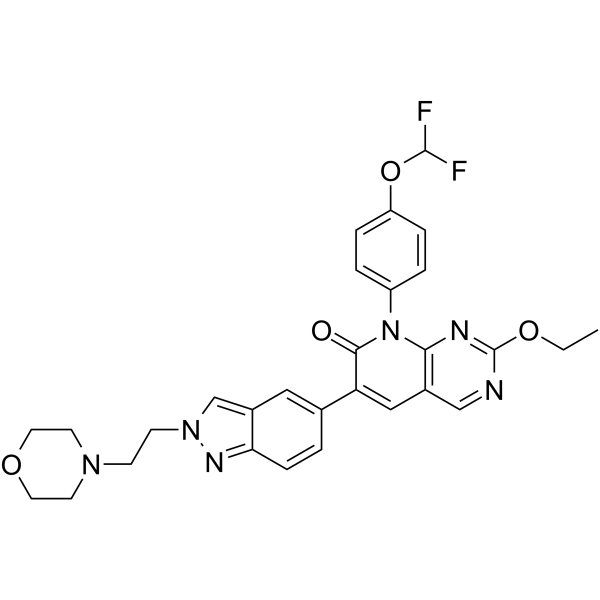 0 ImagesCat. No.: HY-142928CAS No.: 2667053-18-9MAT2A-IN-1 is a potent inhibitor of MAT2A. The expression level of MAT2A is abnormally high in several types of tumors, including gastric, colon, liver and pancreatic cancers. MAT2A-IN-1 reduces the proliferative activity of MTAP-deficient cancer cells. MAT2A-IN-1 has the potential for the research of cancer diseases (extracted from patent WO2021139775A1, compound 64).
-
Onzigolide
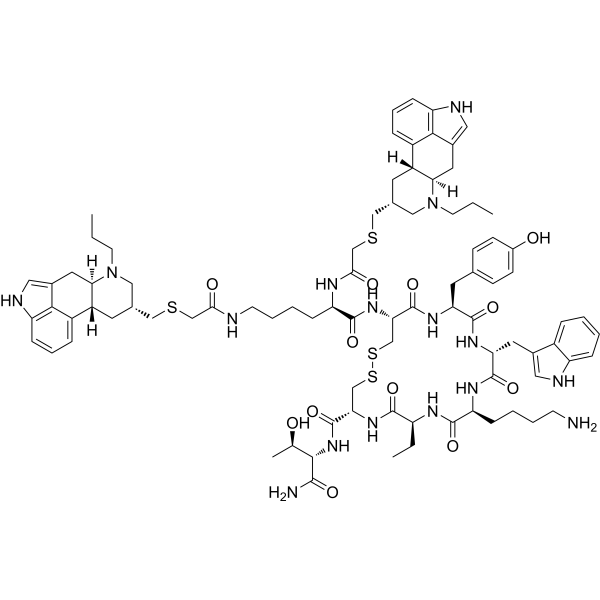 0 ImagesCat. No.: HY-P3294CAS No.: 778630-77-6Synonyms: BIM-23A760; TBR-760Onzigolide (BIM-23A760), a chimeric dopamine-somatostatin compound, shows potent agonist activity at both DA type 2 (D2R) and SST type 2 (SSTR2) receptors.
-
MAT2A-IN-3
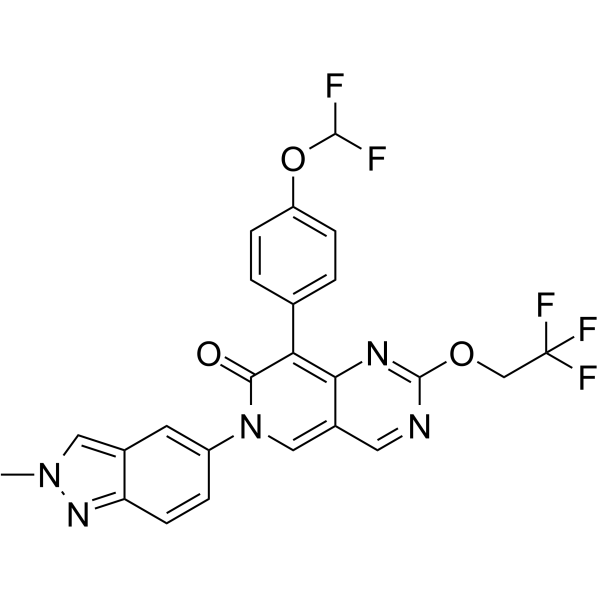 0 ImagesCat. No.: HY-142930CAS No.: 2377493-28-0MAT2A-IN-3 is a potent inhibitor of MAT2A. The expression level of MAT2A is abnormally high in several types of tumors, including gastric, colon, liver and pancreatic cancers. MAT2A-IN-3 reduces the proliferative activity of MTAP-deficient cancer cells. MAT2A-IN-3 has the potential for the research of cancer diseases (extracted from patent WO2019191470A1, compound 265).
-
SSTR5 antagonist 6
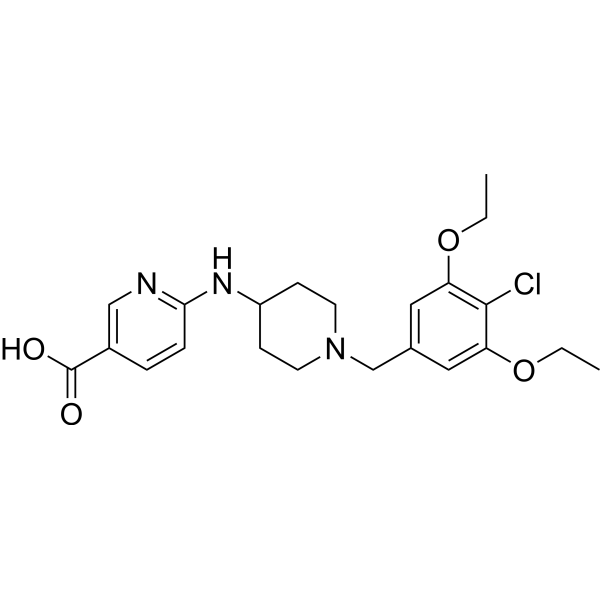 0 ImagesCat. No.: HY-160176CAS No.: 1007836-12-5SSTR5 antagonist 6 is an orally active somatostatin receptor subtype 5 (SSTR5) antagonist with an IC50 of 24 nM. SSTR5 antagonist 6 can be used in the study of type 2 diabetes.
-
SST1 receptor antagonist-1
 0 ImagesCat. No.: HY-177278CAS No.: 868057-23-2SST1 receptor antagonist-1 (Compound 23) is a selective Somatostatin receptor 1 (SST1) antagonist with pKds of 9.11 and 8.79 for rSST1 and hSST1, respectively. SST1 receptor antagonist-1 can be used for retinal and endocrine dysfunctions, cancer and neuropsychiatric disorders research.
-
MK-1421
 0 ImagesCat. No.: HY-12819CAS No.: 1235995-16-0MK-1421 is a potent and selective sstr3 antagonist. MK-1421 regulates insulin secretion by binding to the sstr3. MK-1421 can be used in the research of type 2 diabetes.
-
[D-Trp8,Tyr11] Somatostatin
![[D-Trp8,Tyr11] Somatostatin](https://file.medchemexpress.com/product_pic/hy-p3903.gif "Click to View [D-Trp8,Tyr11] Somatostatin Product Detail") 0 ImagesCat. No.: HY-P3903CAS No.: 75176-06-6[D-Trp8,Tyr11] Somatostatin is an analogue of somatostatin. Somatostatin is a hormone that regulates a variety of bodily functions. DTrp8 residue can increase stability.
0 ImagesCat. No.: HY-P3903CAS No.: 75176-06-6[D-Trp8,Tyr11] Somatostatin is an analogue of somatostatin. Somatostatin is a hormone that regulates a variety of bodily functions. DTrp8 residue can increase stability.
-
[Tyr12] Somatostatin 28 (1-14)
![[Tyr12] Somatostatin 28 (1-14)](https://file.medchemexpress.com/product_pic/hy-p3897.gif "Click to View [Tyr12] Somatostatin 28 (1-14) Product Detail") 0 ImagesCat. No.: HY-P3897CAS No.: 198276-46-9[Tyr12] Somatostatin 28 (1-14) is an analogue of Somatostatin-28 (1-14) (HY-P1499). Somatostatin-28 (1-14) is an N-terminal fragment of the neuropeptide somatostatin-28.
0 ImagesCat. No.: HY-P3897CAS No.: 198276-46-9[Tyr12] Somatostatin 28 (1-14) is an analogue of Somatostatin-28 (1-14) (HY-P1499). Somatostatin-28 (1-14) is an N-terminal fragment of the neuropeptide somatostatin-28.
-
SSTR4 agonist 3
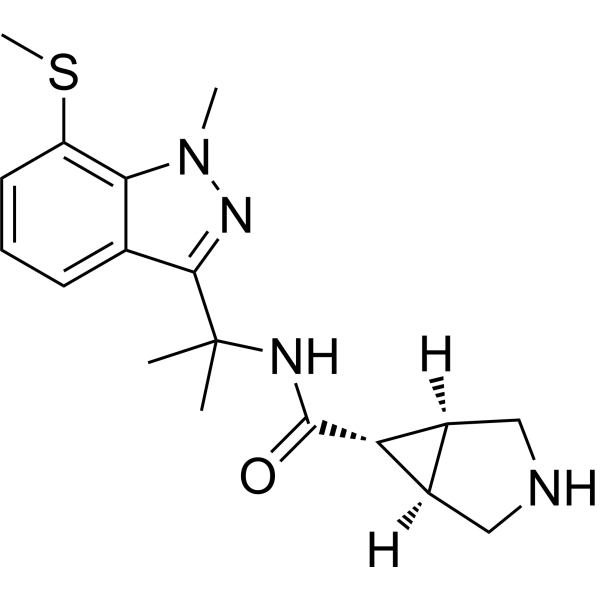 0 ImagesCat. No.: HY-142700CAS No.: 2744188-34-7SSTR4 agonist 3 is a potent agonist of SSTR4. SSTR4 is expressed at relatively high levels in the hippocampus and neocortex, memory and learning regions, and Alzheimer's disease pathology. SSTR4 agonists are potent in rodent models of pain associated with acute and chronic associated anti-peripheral nociceptive and anti-inflammatory activity. SSTR4 agonist 3 has the potential for the research of pain (extracted from patent WO2021233427A1, compound 14).
-
[D-Trp8] Somatostatin-14
![[D-Trp8] Somatostatin-14](https://file.medchemexpress.com/product_pic/hy-p3902.gif "Click to View [D-Trp8] Somatostatin-14 Product Detail") 0 ImagesCat. No.: HY-P3902CAS No.: 58976-46-8[D-Trp8] Somatostatin-14, a tetradecapeptide, is an analog of Somatostatin more potent than the native Somatostatin.
0 ImagesCat. No.: HY-P3902CAS No.: 58976-46-8[D-Trp8] Somatostatin-14, a tetradecapeptide, is an analog of Somatostatin more potent than the native Somatostatin.
-
TATE-DA-I
 0 ImagesCat. No.: HY-P11924TATE-DA-I is a somatostatin receptor 2 (SSTR2) ligand with an IC50 of 25.3 nM. TATE-DA-I binds to albumin to prolong its circulation retention time and also exhibits enhanced tumor accumulation capacity. TATE-DA-I enables clear visualization of SSTR2-positive tumors in SPECT/CT imaging. TATE-DA-I can be used in cancer-related research.
-
Depreotide
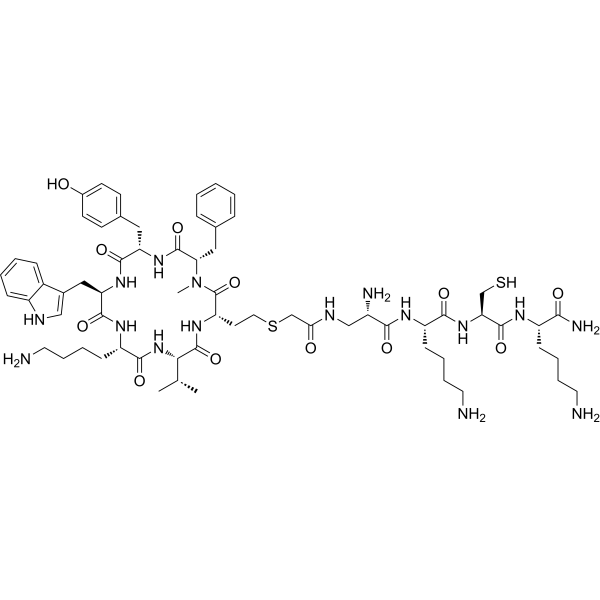 0 ImagesCat. No.: HY-114133CAS No.: 161982-62-3Depreotide is a nove tumor tarcer, can be complexed with technetium-99m (99mTc-depreotide) for optimal imaging properties. 99mTc-depreotide somatostain receptor imaging has been playing an important role in medical diagnosis research. Depreotide can be used for the synthesis/research of Radionuclide-Drug Conjugates (RDCs).
-
SSTR3 agonist-1 TFA
 0 ImagesCat. No.: HY-177493ASSTR3 agonist-1 TFA is a potent, orally active, and selective SSTR3 agnoist (EC50 =0.14 nM). SSTR3 agonist-1 TFA binds to SSTR3 receptor to inhibit cAMP activity. SSTR3 agonist-1 TFA decreases kidney weight and kidney cystic index (KCI) in a mouse model of autosomal dominant polycystic kidney disease (ADPKD). SSTR3 agonist-1 TFA can be used for ADPKD research.
-
Octreotide dimer (parallel)
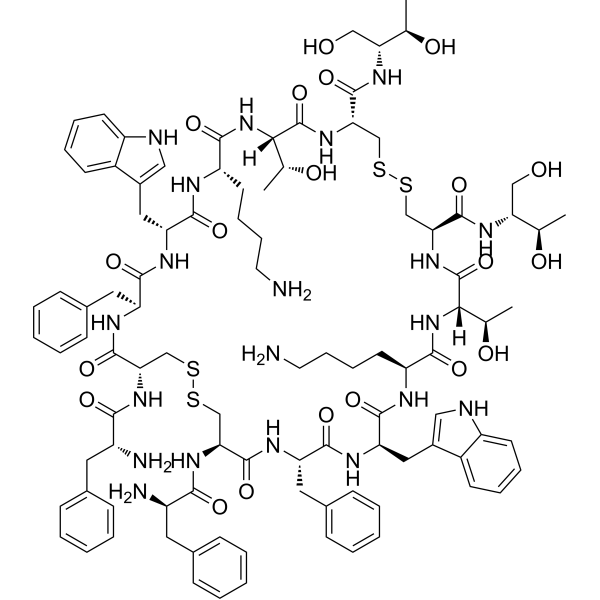 0 ImagesCat. No.: HY-P4957CAS No.: 1926163-80-5Octreotide dimer parallel is a dimer parallel of Octreotide. Octreotide (HY-P0036) is a somatostatin receptor agonist and synthetic octapeptide endogenous somatostatin analogue.
-
Pasireotide (aspartate) TFA
 0 ImagesCat. No.: HY-175053Synonyms: SOM230 (aspartate) TFAPasireotide (aspartate) TFA, a long-acting cyclohexapeptide somatostatin analogue, can improve agonist activity at somatostatin receptors (subtypes sst1/2/3/4/5, pKi=8.2/9.0/9.1/<7.0/9.9, respectively). Pasireotide (aspartate) TFA can suppress GH, IGF-I and ACTH secretion, indicating potential efficacy in acromegaly and Cushing's disease. Pasireotide (aspartate) TFA also exhibits antisecretory, antiproliferative, and proapoptotic activity.
-
AP102
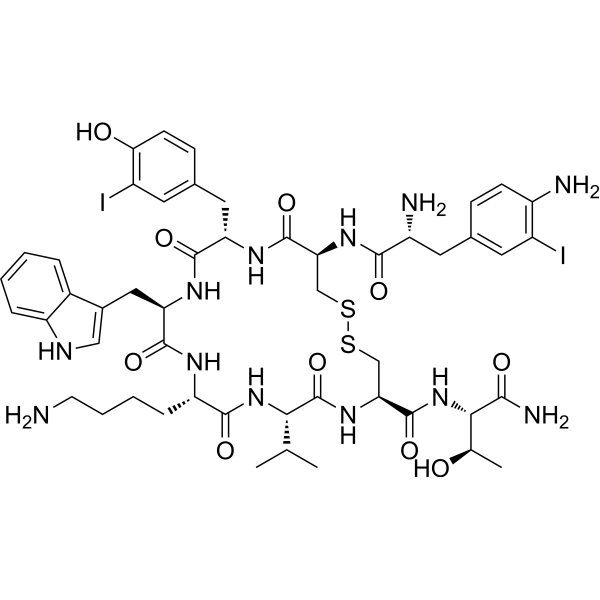 0 ImagesCat. No.: HY-P2434CAS No.: 846569-60-6AP102 is a dual SSTR2/SSTR5-specific somatostatin analog (SSA). AP102 is a disulfide-bridged octapeptide SSA containing synthetic iodinated amino acids. AP102 binds with subnanomolar affinity to SSTR2 and SSTR5 (IC50: 0.63 and 0.65 nM, respectively). AP102 does not bind to SSTR1 or SSTR3. AP102 can be used for acromegaly and neuroendocrine tumors research.

-
Cyclic SSTR agonist octreotide
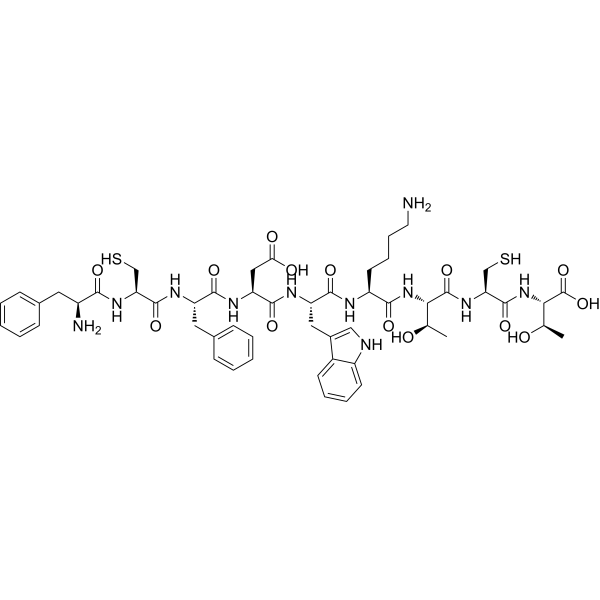 0 ImagesCat. No.: HY-P4100Cyclic SSTR agonist octreotide is a Octreotide (HY-P0036), serving as the cyclic Somatostatin Receptor SSTR agonist.
-
L-803087 TFA
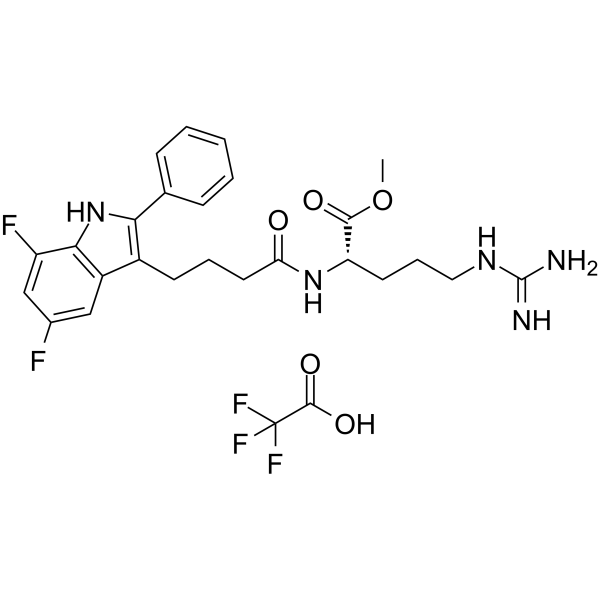 0 ImagesCat. No.: HY-108497ACAS No.: 1786412-46-1L-803087 TFA is a potent and selective somatostatin sst4 receptor agonist with a Ki of 0.7 nM. L-803087 TFA is >280-fold more selective for sst4 receptor than other somatostatin receptors. L-803087 TFA facilitates AMPA-mediated hippocampal synaptic responses in vitro and increases kainate-induced seizures in mice.




